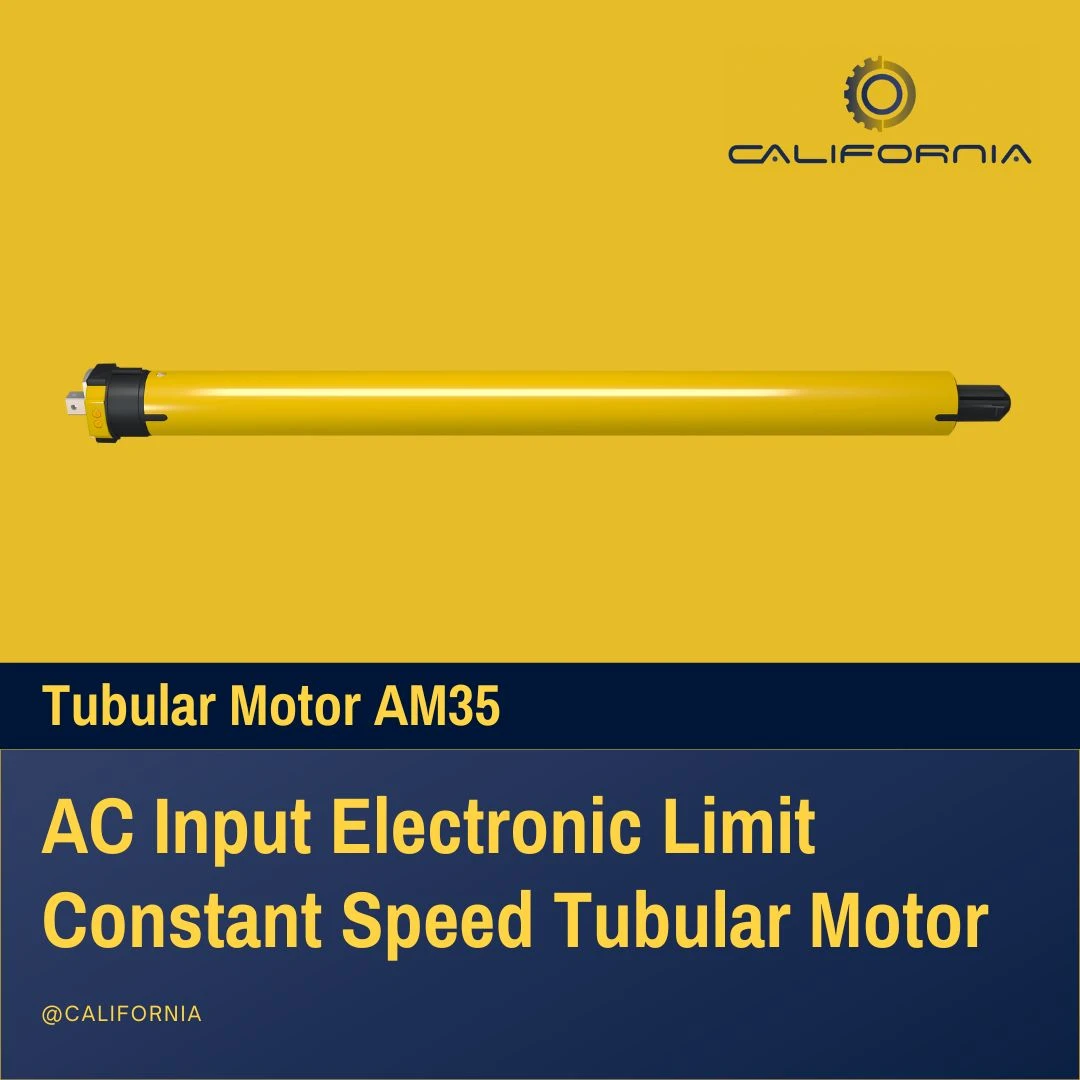
The working principle of a DC tubular motor mainly involves the interaction between the armature and magnetic poles, as well as the force generated by the DC power supply on the armature. The working principle of a DC motor can be divided into two parts: the interaction between the armature and the magnetic poles, and the force generated by the DC power supply on the armature. When the DC power supply is turned on, the current will pass through the armature, causing it to rotate in the magnetic field. During the rotation process, the armature will continuously interact with the magnetic poles, generating a torque that will cause the armature to continue rotating until the torque is balanced with the resistance of the brake on the armature. Meanwhile, when the DC power supply is turned on, it will exert a force on the armature, which can be calculated using Lorentz's law of force. Lorentz's law of force states that when a conductor moves in a magnetic field, it will experience a force perpendicular to the direction of the conductor and the magnetic field. This force is the Lorentz force, and its magnitude and direction depend on the angle between the conductor and the magnetic field, as well as the amount of charge carried by the conductor. When the conductor is perpendicular to the magnetic field, the Lorentz force is at its maximum.