

What is the Torque of an AC Tubular Motor?
As a supplier of AC tubular motors, I often encounter customers who are curious about the concept of torque and its significance in these motors. In this blog post, I'll delve into what torque is, how it relates to AC tubular motors, and why it matters for various applications.
Understanding Torque
Torque is a fundamental concept in physics and engineering, often described as the rotational equivalent of force. In simple terms, torque is the measure of the force that can cause an object to rotate around an axis. Just as a linear force is what makes an object move in a straight line, torque makes an object turn or spin.
Mathematically, torque (τ) is calculated as the product of the force (F) applied and the distance (r) from the axis of rotation to the point where the force is applied, expressed by the formula τ = F × r. The unit of torque is typically the Newton - meter (N·m) in the SI system.
Torque in AC Tubular Motors
AC tubular motors are widely used in various applications, such as roller blinds, awnings, and garage doors. In these motors, torque is crucial because it determines the motor's ability to perform the required tasks.
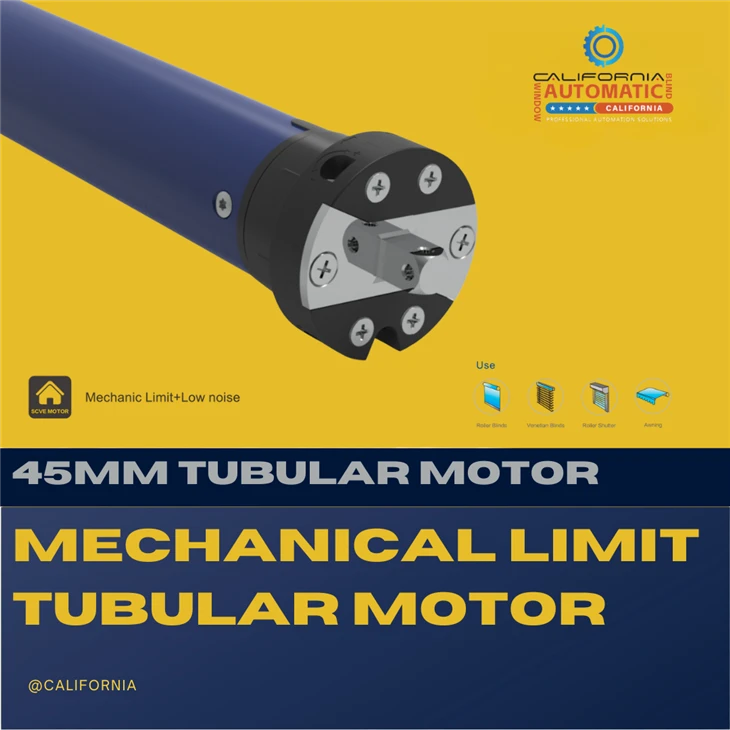
The torque of an AC tubular motor represents its rotational force, which is responsible for moving the load attached to it. For example, in a Roller Blind Tubular Motor, the torque is what enables the motor to roll up or unroll the blind fabric. A motor with insufficient torque may struggle to move the blind, leading to slow operation or even failure to function properly.
Similarly, in a Quiet Awning Motor, torque is essential for extending and retracting the awning. The weight and size of the awning determine the amount of torque required. A larger and heavier awning will need a motor with higher torque to operate smoothly.

Factors Affecting Torque in AC Tubular Motors
Several factors can influence the torque output of an AC tubular motor:
- Motor Design: The internal design of the motor, including the number of windings, the type of magnetic materials used, and the configuration of the stator and rotor, plays a significant role in determining the torque. Motors with more windings or stronger magnetic fields generally produce higher torque.
- Voltage and Frequency: AC tubular motors are designed to operate at specific voltage and frequency levels. Deviations from these rated values can affect the motor's torque output. For example, a decrease in voltage may result in a reduction in torque, while an increase in frequency can sometimes increase the torque within a certain range.
- Load Characteristics: The nature of the load attached to the motor also affects the required torque. A load with high inertia, such as a large - diameter roller blind or a heavy awning, requires more torque to start moving and to maintain a constant speed. Additionally, the friction in the mechanical system, such as the bearings and gears, can increase the load on the motor and thus the required torque.
Types of Torque in AC Tubular Motors
There are two main types of torque that are important in the operation of AC tubular motors:
- Starting Torque: This is the torque required to start the motor and overcome the static friction of the load. Starting torque is usually higher than the running torque because it needs to initiate the movement of the load from a stationary position. A motor with sufficient starting torque is essential to ensure reliable operation, especially for heavy or large - scale applications.
- Running Torque: Once the motor is up and running, it needs to maintain a certain level of torque to keep the load moving at a constant speed. The running torque depends on the resistance of the load and the efficiency of the motor. If the running torque is too low, the motor may slow down or stall under load.
Importance of Torque in Different Applications
- Roller Blinds: In roller blind applications, the torque of the motor determines how quickly and smoothly the blind can be opened or closed. A motor with high torque can handle larger and heavier blinds, allowing for a wider range of design options. For instance, a 45mm Quiet Roller Motor with appropriate torque can provide quiet and efficient operation for medium - to large - sized roller blinds.
- Awnings: Awnings are often exposed to external forces such as wind, which can increase the load on the motor. A motor with high torque is necessary to ensure that the awning can be extended and retracted safely and reliably, even in adverse weather conditions.
- Garage Doors: Garage doors are typically heavy and require a motor with sufficient torque to lift and lower them. The starting torque is particularly important in this application to overcome the initial inertia of the door.
Selecting the Right Torque for Your Application
When choosing an AC tubular motor for a specific application, it is crucial to select a motor with the appropriate torque. Here are some steps to help you make the right choice:
- Determine the Load Requirements: Calculate the weight, size, and inertia of the load that the motor will need to move. Consider any additional factors such as friction and external forces that may affect the load.
- Consider the Application Requirements: Think about the speed, acceleration, and stopping requirements of the application. For example, if you need the blind to open or close quickly, you may need a motor with higher torque and a faster speed.
- Consult with a Professional: As an AC tubular motor supplier, I recommend consulting with our technical experts. We can provide you with detailed information about the torque requirements for your specific application and help you select the most suitable motor.
Conclusion
Torque is a critical parameter in AC tubular motors, determining their ability to perform various tasks effectively. Understanding the concept of torque, the factors that affect it, and the different types of torque is essential for selecting the right motor for your application.
If you are in the market for an AC tubular motor and need help with torque selection or have any other questions, please feel free to contact us. Our team of experts is ready to assist you in finding the perfect motor solution for your needs. We look forward to discussing your requirements and working with you on your next project.
References
- "Electric Motors and Drives: Fundamentals, Types and Applications" by Austin Hughes and Bill Drury.
- "Motor Handbook" by Arnold E. Fitzgerald, Charles Kingsley Jr., and Stephen D. Umans.