

As a supplier of AC rolling door motors, I often encounter inquiries from customers about the cooling mode of these motors. Understanding the cooling mode is crucial for ensuring the efficient and long - lasting operation of AC rolling door motors. In this blog, I will delve into the different cooling modes of AC rolling door motors, their advantages, and how they impact the performance of the motors.
Natural Cooling
The most basic cooling mode for AC rolling door motors is natural cooling. In this method, the motor dissipates heat through its surface area to the surrounding environment. The heat generated by the motor during operation is transferred to the air around it. The principle behind natural cooling is based on the laws of thermodynamics, specifically heat conduction and convection.
When the motor is running, electrical energy is converted into mechanical energy, and a certain amount of energy is lost in the form of heat due to resistance in the windings and other components. The heat then conducts from the internal parts of the motor to the outer surface. Once on the surface, the heat is carried away by the natural movement of air (convection).
One of the significant advantages of natural cooling is its simplicity. There are no additional components required, which means lower manufacturing costs and fewer parts that can fail. This makes natural - cooled motors relatively reliable. However, natural cooling has its limitations. It is only suitable for motors with low power ratings because the rate of heat dissipation is limited by the surface area of the motor and the natural air movement around it. For high - power AC rolling door motors, natural cooling may not be sufficient to keep the motor at an optimal operating temperature.
Forced Air Cooling
To overcome the limitations of natural cooling, many AC rolling door motors use forced air cooling. In this cooling mode, a fan is attached to the motor. The fan blows air over the motor's surface, increasing the rate of heat transfer from the motor to the surrounding air.
The fan can be either an internal fan or an external fan. An internal fan is usually mounted on the motor shaft and rotates with it. As the motor runs, the fan draws in air from the surroundings and forces it over the motor windings and other heat - generating components. This continuous flow of air helps to carry away the heat more efficiently than natural cooling.
External fans, on the other hand, are installed separately from the motor. They can be designed to direct a large volume of air onto the motor, providing more targeted cooling. Forced air cooling is more effective than natural cooling, especially for motors with higher power outputs. It allows the motor to operate at a lower temperature, which can extend the motor's lifespan and improve its performance.
However, forced air cooling also has some drawbacks. The addition of a fan increases the complexity of the motor system. The fan itself consumes some electrical power, which reduces the overall efficiency of the motor slightly. Also, the fan is a moving part, which means it has a higher risk of failure compared to a motor with natural cooling.
Liquid Cooling
In some high - performance applications, liquid cooling is used for AC rolling door motors. Liquid cooling systems use a coolant, such as water or a special coolant mixture, to absorb heat from the motor. The coolant circulates through channels or pipes within the motor, picking up heat from the hot components.

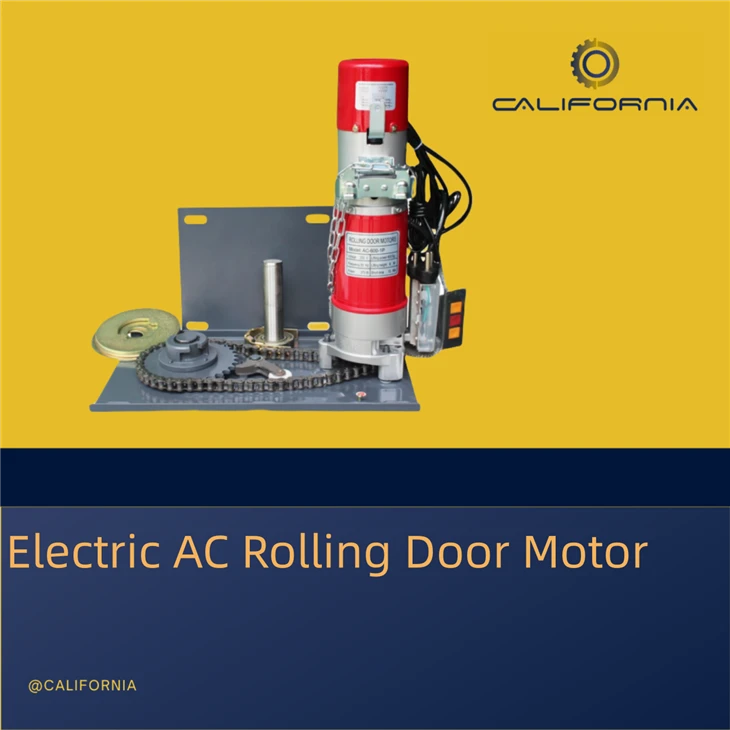
The heated coolant is then pumped to a radiator or heat exchanger, where the heat is transferred to the surrounding air. The cooled coolant is then recirculated back to the motor to continue the cooling process.
Liquid cooling offers several advantages. It is extremely efficient at removing heat, which allows the motor to operate at very high power levels without overheating. Liquid - cooled motors can also be more compact because they can dissipate more heat per unit volume compared to air - cooled motors.
However, liquid cooling systems are more complex and expensive to implement. They require additional components such as pumps, radiators, and hoses, which increase the cost and the potential for leaks. Maintenance of liquid cooling systems is also more involved, as the coolant needs to be checked and replaced periodically.
Impact of Cooling Mode on Motor Performance
The cooling mode of an AC rolling door motor has a significant impact on its performance. A well - cooled motor can operate more efficiently because it experiences less thermal stress. When a motor overheats, the resistance of its windings increases, which leads to higher power consumption and lower efficiency.
Overheating can also cause damage to the insulation of the windings, which can lead to short - circuits and motor failure. By maintaining a lower operating temperature, the cooling mode helps to preserve the integrity of the motor's components and extend its lifespan.
For example, a high - power commercial AC rolling door motor that uses forced air cooling or liquid cooling can open and close the door more frequently without overheating. This is crucial in commercial settings where the door may be used multiple times a day.
Choosing the Right Cooling Mode
When choosing an AC rolling door motor, it is essential to consider the application requirements. For residential applications where the door is used less frequently and the motor power is relatively low, a motor with natural cooling may be sufficient. It is cost - effective and reliable.
For commercial applications where the door is used more often and the motor needs to handle higher loads, forced air cooling or liquid cooling may be necessary. These cooling modes can ensure that the motor operates at an optimal temperature, reducing the risk of overheating and extending the motor's lifespan.
As a supplier, we offer a range of AC rolling door motors with different cooling modes to meet the diverse needs of our customers. Our Electric Roller Garage Door Opener is suitable for residential use and often comes with natural or forced air cooling options. For more demanding commercial applications, our Single Phase Roller Shutter Motor and Commercial Roll Up Door Motor are available with advanced cooling solutions such as forced air or liquid cooling.
Conclusion
In conclusion, the cooling mode of an AC rolling door motor is a critical factor that affects its performance, efficiency, and lifespan. Natural cooling is simple and cost - effective but has limitations in high - power applications. Forced air cooling offers better heat dissipation but adds complexity. Liquid cooling is the most efficient but also the most expensive and complex.
If you are in the market for an AC rolling door motor, it is important to choose the right cooling mode based on your specific needs. Our team of experts is always ready to assist you in making the right choice. Whether you need a motor for a residential garage or a commercial establishment, we can provide you with the best solution. Contact us today to start a discussion about your requirements and explore our range of AC rolling door motors.
References
- "Electric Motors and Drives: Fundamentals, Types, and Applications" by Austin Hughes and Bill Drury.
- "Thermal Management of Electric Machines" by various authors in the IEEE Transactions on Industry Applications.