


abeel@shuttermotor.cn
Choosing a tubular motor is often more complicated than it appears at first glance. During the quotation stage, many buyers focus on motor diameter, voltage, or pricing. However, the factors that usually determine long-term performance are load calculations, installation conditions, operating frequency, and control requirements.
Over the years, we've seen projects where the motor met the calculated load requirements on paper but still experienced thermal shutdowns after installation. In most cases, the problem wasn't the motor itself-it was an incomplete selection process that failed to account for factors such as friction, wind resistance, or future operating demands.
Whether you're sourcing motors for roller blinds, zip screens, awnings, or rolling shutters, taking the time to evaluate these details can help avoid costly modifications later.
Why Motor Diameter Matters

One of the first questions OEM manufacturers and contractors often ask is whether a 35mm motor can be used instead of a 45mm model to reduce system cost.
The answer depends largely on the application.
For lightweight interior shading systems, a 35mm tubular motor is often sufficient. These motors are commonly installed inside 40mm to 50mm round or grooved tubes and are available in both AC and DC configurations.
Typical specifications include:
* Torque: 3N.m to 10N.m
* Speed: 14rpm to 28rpm
* Power Supply: 230V/50Hz AC, 120V/60Hz AC, 12V DC, or 24V DC
In residential blinds and smaller commercial shades, this motor size generally provides a good balance between performance and installation flexibility.
45mm Tubular Motors
Dual-station multi-axis intelligent working platform;
Synchronised CCD precision positioning;
The larger housing accommodates a bigger stator and rotor assembly, allowing significantly higher torque output. These motors are widely used for exterior zip screens, heavy-duty roller blinds, and rolling shutters.
Typical specifications include:
* Torque: 10N.m to 50N.m
* Speed: 12rpm to 26rpm
* Compatible Tube Sizes: 60mm, 70mm, and 80mm
The additional torque reserve is particularly valuable when guide-track friction, fabric tension, or environmental loads increase
resistance during operation.
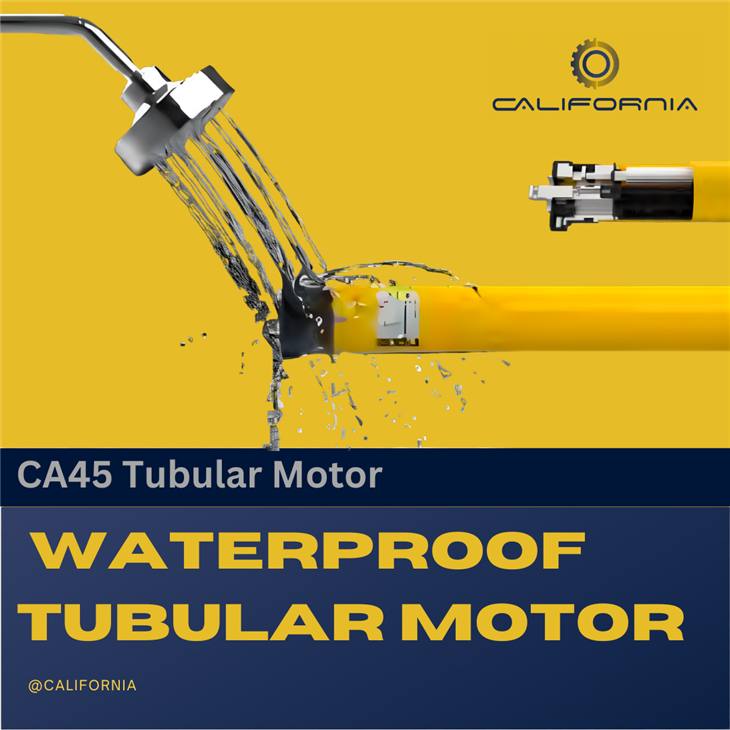
Technical Comparison
|
Specification |
35mm Series |
45mm Series |
|
Torque Range |
3N.m – 10N.m |
10N.m – 50N.m |
|
Speed |
14rpm – 28rpm |
12rpm – 26rpm |
|
Maximum Lift Capacity |
Up to 25kg |
Up to 110kg |
|
Protection Rating |
IP44 |
IP44 / IP55 |
|
Insulation Class |
Class F |
Class F |
|
Noise Level |
<42dB(A) |
<45dB(A) |
|
Rated Running Time |
4 Minutes |
4 Minutes |
How Much Torque Do You Really Need?
Torque selection is where many specification mistakes occur.
A common assumption is that motor sizing can be based entirely on curtain or fabric weight. While weight is important, it is only part of the equation. The motor must also overcome friction within the tube, drive components, guide rails, and, in outdoor installations, wind-related forces.
A contractor once shared an exterior zip-screen project where the calculated curtain weight suggested a 10N.m motor would be sufficient. During testing, everything worked as expected. After installation, however, several screens began stopping intermittently.
Further investigation showed that side-track friction and seasonal wind loads had not been included in the original calculations. Once the torque requirement was recalculated and higher-rated motors were installed, the issue disappeared.
This is why experienced engineers rarely size a motor according to fabric weight alone.
Reference Load Capacity Chart (Based on a 60mm Smooth Tube, Safety Factor 1.2)
|
Motor Torque |
Speed |
Maximum Load |
|
6N.m |
28rpm |
14kg |
|
10N.m |
17rpm |
23kg |
|
20N.m |
15rpm |
45kg |
|
40N.m |
12rpm |
82kg |
|
50N.m |
12rpm |
105kg |
For outdoor zip screens and awnings, many engineers add additional safety margins because friction and wind pressure can increase torque demand by as much as 40%.
Choosing the Right Control System
Motor performance is only one part of the selection process. Control requirements have become increasingly important, particularly in commercial and smart-building projects.
Most installations today use one of three control methods:
* Radio Frequency (RF) Control
* Dry Contact Relay Control
* RS485 Communication
RF Control
RF systems operating at 433.92MHz remain popular in residential applications because installation is simple and no additional communication wiring is required.
Using rolling-code technology and superheterodyne receivers, these systems can provide reliable control over long distances under suitable conditions.
RS485 Communication
Commercial projects often have different priorities.
Facility managers may need position feedback, fault monitoring, group control, or integration with a Building Management System (BMS). In these situations, RS485 communication provides a practical solution by enabling two-way communication between the motor and the central controller.
Instead of simply sending commands, the system can also report operating status, position information, and thermal protection events.
Dry Contact Control
For projects that require only basic Up, Stop, and Down commands, dry-contact relay control remains a straightforward and reliable option.
The low-voltage control circuit stays isolated from the motor's AC power supply, simplifying integration with many automation systems.
Mechanical vs. Electronic Limits
Mechanical limit switches continue to be widely used because they are simple, durable, and easy to adjust.
Electronic limits, however, have become increasingly popular in larger automation projects. Although they generally cost more, they offer advantages such as intermediate stopping positions, easier group control, and more flexible system integration.
The right choice often depends more on project requirements than on motor performance alone.
Common Issues That Are Often Overlooked
During specification reviews, three areas repeatedly cause problems after installation.
Thermal Duty Cycles
Most tubular motors are designed for intermittent operation rather than continuous running.
To prevent damage, internal thermal protection usually activates when winding temperatures reach approximately 130°C to 140°C. Once triggered, the motor may require 20 to 30 minutes to cool before normal operation can resume.
This limitation is sometimes overlooked in projects involving frequent operating cycles.
Adapter Compatibility
Even when the motor itself is correctly selected, installation accessories can create unexpected issues.
The drive adapter transfers all motor torque into the winding tube. Small dimensional mismatches may introduce backlash, vibration, increased noise, and premature gearbox wear over time.
For this reason, adapter compatibility should always be verified during the specification stage.
Protection Ratings
Outdoor environments expose motors to moisture, condensation, and temperature fluctuations that are rarely encountered indoors.
While an IP44 motor may perform well in interior applications, exterior shutters, awnings, and architectural screens often require IP55 or IP65 protection.
Additional shaft seals, cable-entry protection, and weather-resistant housing components can significantly improve long-term reliability.
Final Thoughts
After reviewing hundreds of tubular motor specifications, one pattern appears repeatedly: successful projects rarely depend on choosing the largest motor available.
Instead, the best results come from balancing tube size, load requirements, operating frequency, environmental conditions, and control architecture from the beginning of the project.
For buyers and system manufacturers, confirming these factors before requesting quotations can reduce installation issues, improve reliability, and help ensure that the selected motor performs as expected throughout its service life.