

Hey there! As a supplier of AC rolling door motors, I often get asked about how these motors dissipate heat. It's a crucial aspect because proper heat dissipation ensures the motor's longevity and efficient operation. In this blog, I'll break down the different heat dissipation methods used in AC rolling door motors.
Why Heat Dissipation Matters
Before we dive into the methods, let's understand why heat dissipation is so important. When an AC rolling door motor is in operation, electrical energy is converted into mechanical energy. However, this process isn't 100% efficient, and some of the energy is lost as heat. If this heat isn't dissipated effectively, it can cause several problems.
Excessive heat can lead to a decrease in the motor's efficiency. The motor has to work harder to perform the same tasks, which not only wastes energy but also increases wear and tear on the components. Over time, this can lead to premature failure of the motor. Additionally, high temperatures can damage the insulation of the motor windings, increasing the risk of short - circuits and electrical hazards.
Natural Convection
One of the simplest and most common heat dissipation methods is natural convection. In this method, the motor is designed in such a way that heat is transferred from the motor's surface to the surrounding air. The basic principle behind natural convection is that hot air rises. As the motor heats up, the air around it also gets heated. This hot air rises, and cooler air from the surroundings moves in to replace it.
The design of the motor plays a crucial role in natural convection. Motors with a larger surface area are more effective at dissipating heat through natural convection. For example, some AC rolling door motors have fins on their outer casing. These fins increase the surface area of the motor, allowing more heat to be transferred to the surrounding air.
However, natural convection has its limitations. It is relatively slow and may not be sufficient for motors that generate a large amount of heat. In environments where the ambient temperature is high, natural convection may not be able to keep the motor cool enough.
Forced Convection
To overcome the limitations of natural convection, many AC rolling door motors use forced convection. Forced convection involves using a fan to blow air over the motor. The fan increases the rate of air movement around the motor, which in turn increases the rate of heat transfer.
There are two main types of fans used in AC rolling door motors: internal fans and external fans. Internal fans are usually located inside the motor housing. They are directly connected to the motor shaft and rotate as the motor operates. These fans draw air through the motor, cooling the internal components.
External fans, on the other hand, are mounted outside the motor. They can be more powerful and are often used in larger motors or in applications where the motor generates a significant amount of heat. For example, in a Commercial Roll Up Door Motor, which is designed for heavy - duty use, an external fan may be used to ensure efficient heat dissipation.
Forced convection is much more effective than natural convection. It can quickly remove heat from the motor, even in high - temperature environments. However, the use of a fan adds to the complexity and cost of the motor. Additionally, the fan itself consumes some energy, which can slightly reduce the overall efficiency of the motor.
Heat Sinks
Heat sinks are another important component in heat dissipation systems. A heat sink is a passive device that is designed to absorb and dissipate heat. It is usually made of a material with high thermal conductivity, such as aluminum or copper.

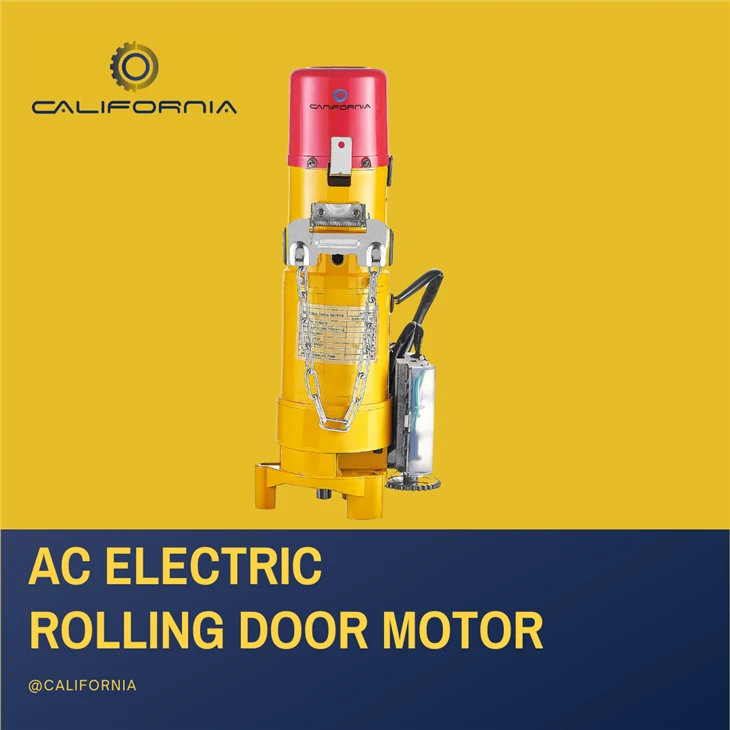
Heat sinks are attached to the motor's surface, often in areas where the heat is most concentrated. They work by increasing the surface area available for heat transfer. The heat from the motor is conducted into the heat sink, and then from the heat sink to the surrounding air.
In some AC rolling door motors, heat sinks are combined with fans. The fan blows air over the heat sink, increasing the rate of heat transfer. This combination can be very effective in keeping the motor cool, especially for motors that operate under heavy loads. For instance, a 600 kg Rolling Shutter Motor may require a heat sink - fan combination to handle the high - power requirements and the resulting heat generation.
Liquid Cooling
Although less common in AC rolling door motors, liquid cooling is a very efficient heat dissipation method. In liquid cooling systems, a coolant (usually water or a water - glycol mixture) is circulated through channels in the motor. The coolant absorbs the heat from the motor and then transfers it to a radiator, where it is dissipated into the surrounding air.
Liquid cooling has several advantages. It can provide very efficient heat dissipation, even for motors that generate a large amount of heat. It is also more precise in controlling the motor's temperature. However, liquid cooling systems are more complex and expensive to install and maintain. They require a pump to circulate the coolant, a radiator, and a system to prevent leaks. For most AC rolling door motor applications, the cost and complexity of liquid cooling make it less practical.
Factors Affecting Heat Dissipation
Several factors can affect the effectiveness of heat dissipation in AC rolling door motors. The ambient temperature is one of the most important factors. In hot environments, it is more difficult for the motor to dissipate heat. The motor may need to work harder to maintain its performance, which can lead to even more heat generation.
The load on the motor also plays a role. Motors that are constantly operating under heavy loads will generate more heat than those that operate under light loads. For example, an Electric Roller Garage Door Opener that is used frequently to open and close a heavy garage door will generate more heat compared to one that is used less often.
The ventilation in the installation area is also crucial. If the motor is installed in a confined space with poor ventilation, the heat will not be able to dissipate effectively. It is important to ensure that there is enough space around the motor for air to circulate.
Choosing the Right Heat Dissipation Method
When choosing an AC rolling door motor, it is important to consider the heat dissipation method. For light - duty applications, a motor with natural convection or a simple forced - convection system may be sufficient. However, for heavy - duty applications, a motor with a more advanced heat dissipation system, such as a combination of forced convection and heat sinks, may be required.
As a supplier of AC rolling door motors, I can help you choose the right motor for your specific needs. We offer a wide range of motors with different heat dissipation methods to ensure that you get a motor that is reliable and efficient.
If you are in the market for an AC rolling door motor, don't hesitate to reach out. We can discuss your requirements in detail and provide you with the best solution. Whether you need a motor for a commercial building or a residential garage, we have the expertise to help you make the right choice.
References
- "Electric Motor Handbook"
- "Thermal Management of Electric Motors"