

Frequency - domain analysis is a crucial technique in the study and design of control systems. As a control system supplier, understanding and leveraging frequency - domain analysis can significantly enhance the performance and reliability of the systems we offer. In this blog, we will explore what frequency - domain analysis is, its importance, and how it relates to the control systems we provide.
What is Frequency - Domain Analysis?
In the realm of control systems, we often deal with two main domains: the time domain and the frequency domain. The time - domain analysis focuses on how a system behaves over time. It examines the response of a system to an input as a function of time, such as the step response or the impulse response. For example, when we turn on a light switch (input), we can observe how the light gradually reaches its full brightness over time (output in the time domain).
On the other hand, frequency - domain analysis transforms the time - domain signals into the frequency domain using mathematical tools like the Fourier transform or the Laplace transform. The frequency domain represents a signal as a combination of sinusoidal components with different frequencies, amplitudes, and phases. Instead of looking at how a system responds to a specific input at each instant in time, we analyze how the system responds to sinusoidal inputs of different frequencies.
To illustrate this, consider a simple electrical circuit with a resistor and a capacitor (an RC circuit). When we apply a sinusoidal voltage input to this circuit, the output voltage will also be a sinusoid, but its amplitude and phase may be different from the input. By varying the frequency of the input sinusoid and measuring the corresponding output amplitude and phase, we can construct a frequency response curve for the RC circuit. This curve shows how the circuit behaves at different frequencies, which is the essence of frequency - domain analysis.
Importance of Frequency - Domain Analysis in Control Systems
Frequency - domain analysis offers several advantages in the design and analysis of control systems.
Stability Analysis
One of the most critical aspects of control system design is ensuring stability. A stable control system is one that returns to a steady - state condition after being disturbed. Frequency - domain methods, such as the Nyquist stability criterion, provide a powerful way to analyze the stability of a control system. The Nyquist plot is a graphical representation of the frequency response of a system in the complex plane. By examining the Nyquist plot, we can determine whether the system is stable, marginally stable, or unstable without having to solve the differential equations that describe the system in the time domain.
Performance Evaluation
Frequency - domain analysis allows us to evaluate the performance of a control system in terms of its bandwidth, gain margin, and phase margin. Bandwidth is a measure of the range of frequencies over which the system can effectively operate. A wider bandwidth means that the system can respond to higher - frequency inputs, which is often desirable in applications where fast response is required. Gain margin and phase margin are measures of how close the system is to instability. A larger gain margin and phase margin indicate a more stable and robust system.
System Design and Tuning
When designing a control system, frequency - domain analysis can guide us in selecting the appropriate controller parameters. For example, in a proportional - integral - derivative (PID) controller, the gain values of the proportional, integral, and derivative terms can be adjusted based on the frequency response of the system. By analyzing the frequency response, we can determine the frequencies at which the system needs more or less gain and adjust the controller parameters accordingly to achieve the desired performance.
Frequency - Domain Analysis and Our Control System Products
As a control system supplier, we offer a wide range of products, including Garage Door Controller, Motorized System Receiver, and Motorized Blind Switch. Frequency - domain analysis plays a vital role in the development and optimization of these products.
Garage Door Controller
A garage door controller needs to be able to respond quickly and accurately to user commands while also being stable and reliable. Frequency - domain analysis can help us design a controller that can handle different frequencies of disturbances, such as vibrations from the garage door motor or external environmental factors. By analyzing the frequency response of the garage door system, we can adjust the controller parameters to ensure that the door opens and closes smoothly and safely.
Motorized System Receiver
The motorized system receiver is responsible for receiving and processing control signals to drive the motorized components. Frequency - domain analysis can be used to optimize the receiver's performance in terms of signal reception and noise rejection. For example, by analyzing the frequency spectrum of the incoming signals and the background noise, we can design a receiver with a suitable filter to enhance the signal - to - noise ratio and improve the overall performance of the motorized system.
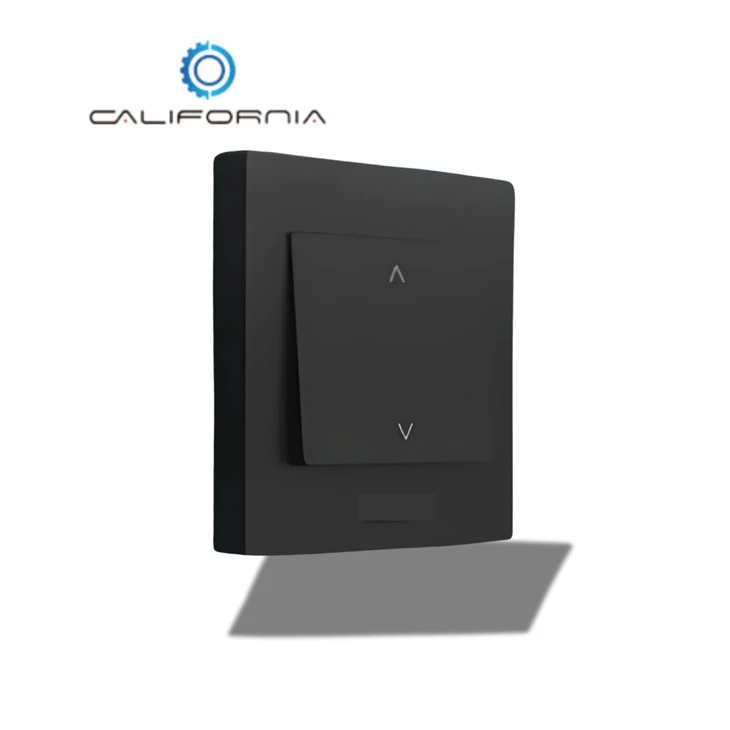
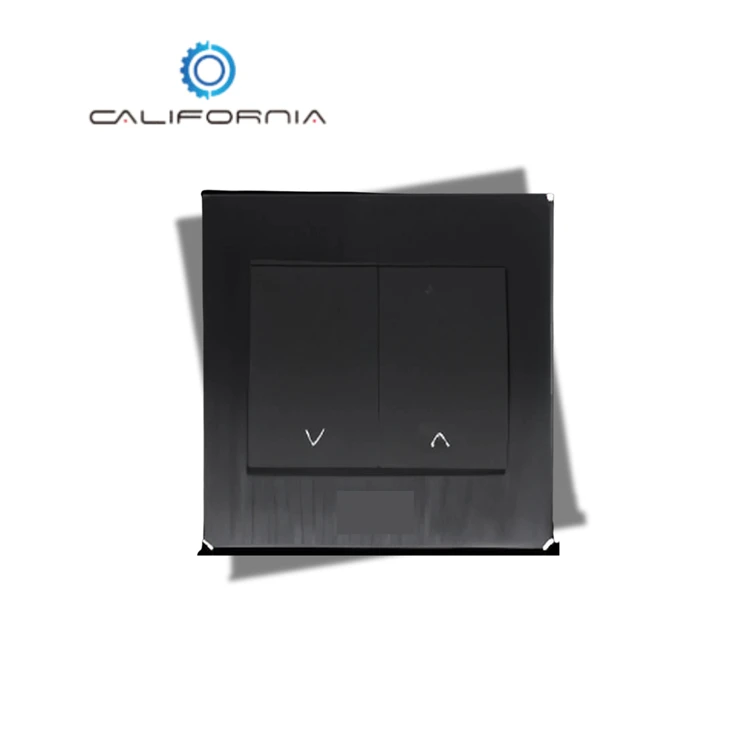
Motorized Blind Switch
A motorized blind switch needs to control the movement of the blinds accurately. Frequency - domain analysis can help us understand how the blind system responds to different frequencies of control signals. This information can be used to design a controller that can provide smooth and precise control of the blind movement, even in the presence of external disturbances such as wind or mechanical vibrations.
How We Apply Frequency - Domain Analysis in Our Work
In our development process, we follow a systematic approach to apply frequency - domain analysis.
Modeling
First, we create a mathematical model of the control system. This model can be a transfer function, which describes the relationship between the input and output of the system in the frequency domain. For example, for a linear time - invariant system, the transfer function can be obtained by taking the Laplace transform of the differential equations that describe the system.
Frequency Response Measurement
Once we have a model, we measure the frequency response of the actual system. This can be done by applying sinusoidal inputs of different frequencies to the system and measuring the corresponding output amplitudes and phases. We use specialized equipment, such as spectrum analyzers and network analyzers, to perform these measurements accurately.
Analysis and Optimization
Based on the measured frequency response, we analyze the system's performance in terms of stability, bandwidth, gain margin, and phase margin. If the system does not meet the desired performance criteria, we use frequency - domain design techniques to optimize the controller parameters. This may involve adding compensators, such as lead - lag compensators, to improve the system's frequency response.
Verification
Finally, we verify the performance of the optimized system through simulations and real - world testing. We compare the predicted frequency response from the model with the actual measured response to ensure that the system meets the design requirements.
Contact Us for Your Control System Needs
If you are in the market for high - quality control systems, our products, including the Garage Door Controller, Motorized System Receiver, and Motorized Blind Switch, are designed with the latest frequency - domain analysis techniques to ensure optimal performance and reliability.
We are committed to providing customized solutions to meet your specific requirements. Whether you need a simple control system for a small - scale application or a complex system for an industrial setting, our team of experts is ready to assist you. Contact us today to start a discussion about your control system needs and explore how our products can benefit your projects.
References
- Ogata, Katsuhiko. "Modern Control Engineering." Prentice Hall, 2009.
- Dorf, Richard C., and Robert H. Bishop. "Modern Control Systems." Pearson, 2017.
- Franklin, Gene F., J. David Powell, and Abbas Emami - Naeini. "Feedback Control of Dynamic Systems." Pearson, 2015.