

Hey there! As a supplier of DC rolling door motors, I've spent a ton of time diving into the nitty - gritty details of these motors, especially their electromagnetic interference (EMI) characteristics. In this blog, I'm gonna share what I've learned about the EMI of DC rolling door motors.
First off, let's understand what electromagnetic interference is. EMI is basically the disturbance that affects an electrical circuit due to either electromagnetic induction or electromagnetic radiation emitted from an external source. For DC rolling door motors, EMI can come from a bunch of different places and can have various impacts.
One of the main sources of EMI in DC rolling door motors is the commutation process. When the motor is running, the brushes in the motor make and break contact with the commutator segments. This creates a rapid change in current, which in turn generates electromagnetic fields. These fields can radiate outwards and interfere with other electronic devices in the vicinity. For example, if there are sensitive electronic control systems near the rolling door, like a home automation system or a security sensor, the EMI from the motor can cause false readings or malfunctions.
Another factor contributing to EMI is the switching action in the motor's power supply. Most DC rolling door motors use power electronics for speed control and direction change. These power electronics, such as MOSFETs or IGBTs, switch on and off at high frequencies. The fast - rising and falling edges of the switching waveforms produce high - frequency harmonics, which are a major source of electromagnetic radiation. These harmonics can spread through the power lines and also radiate into the surrounding space.
Now, let's talk about the types of EMI that a DC rolling door motor can generate. There are two main types: conducted EMI and radiated EMI.
Conducted EMI is the interference that travels along the power lines and signal lines connected to the motor. When the motor is operating, the high - frequency noise generated by the commutation and switching processes can be conducted back to the power source. This can cause problems for other devices connected to the same power grid. For instance, if the rolling door motor is installed in a commercial building, the conducted EMI can affect other electrical equipment in the building, like computers, printers, or lighting systems.

Radiated EMI, on the other hand, is the electromagnetic radiation that is emitted into the surrounding space. The magnetic fields generated by the motor's electrical currents can radiate outwards and interfere with nearby electronic devices. The strength of the radiated EMI depends on several factors, such as the motor's power rating, the operating frequency, and the distance from the motor to the affected device.
So, what are the effects of EMI on the performance of the DC rolling door motor itself? Well, excessive EMI can cause problems with the motor's control system. The high - frequency noise can interfere with the signals sent to the motor controller, leading to inaccurate speed control or erratic operation. This can result in the door not opening or closing smoothly, or even getting stuck in the middle of the operation.
To deal with these EMI issues, there are several techniques that can be employed. One common method is the use of electromagnetic shielding. By enclosing the motor in a metal casing, the electromagnetic fields can be contained, reducing the amount of radiated EMI. The metal casing acts as a Faraday cage, preventing the electromagnetic waves from escaping.
Another technique is the use of filters. Filters can be installed on the power lines and signal lines connected to the motor. These filters are designed to block the high - frequency noise while allowing the normal operating frequencies to pass through. For example, a low - pass filter can be used to remove the high - frequency harmonics from the power supply, reducing the conducted EMI.
As a supplier of DC rolling door motors, we understand the importance of minimizing EMI. That's why we've put a lot of effort into developing motors with low EMI characteristics. Our Shutter Door Rolling Machine is designed with advanced electromagnetic shielding and filtering techniques to ensure that it meets the strictest EMI standards.
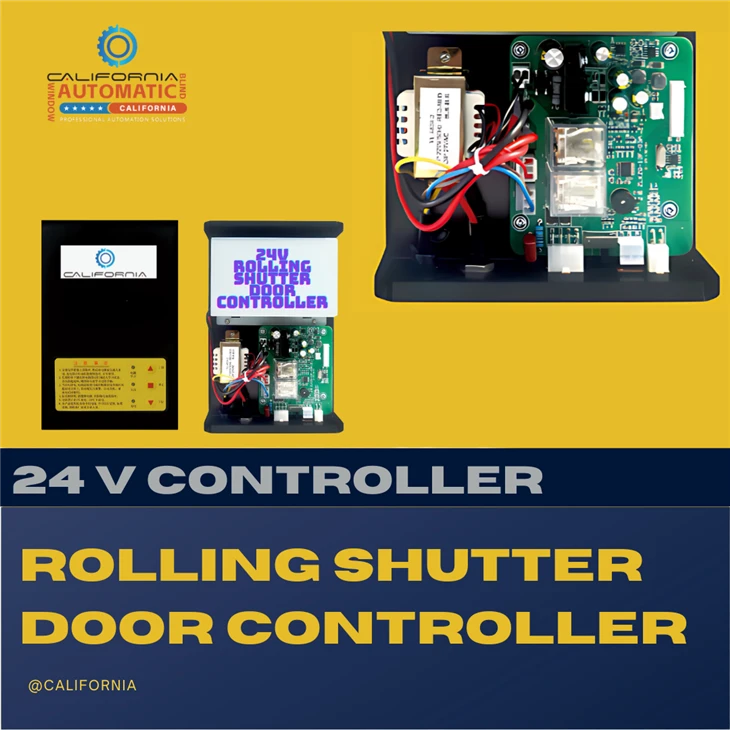
Our 24V DC Rolling Shutter Motor is another product that we're really proud of. It uses high - quality power electronics and optimized commutation systems to reduce the generation of EMI. And when paired with our 24V Rolling Shutter Controller, the overall EMI performance of the system is further improved.
If you're in the market for a DC rolling door motor, it's crucial to consider the EMI characteristics. A motor with high EMI can cause a lot of headaches, not only for your rolling door system but also for other electronic devices in the area. By choosing our motors, you can be confident that you're getting a product that is reliable, efficient, and has low EMI.
We're always open to discussing your specific requirements and finding the best solution for your needs. Whether you're a contractor, a building owner, or an installer, we can provide you with the right DC rolling door motor and support. So, if you're interested in learning more or making a purchase, don't hesitate to get in touch with us. We're here to help you make the right choice for your rolling door system.
References
- "Electromagnetic Compatibility Engineering" by Henry W. Ott
- "Power Electronics: Converters, Applications, and Design" by Ned Mohan, Tore M. Undeland, and William P. Robbins